
Can Electric Lawn Mowers Cut Long Grass?
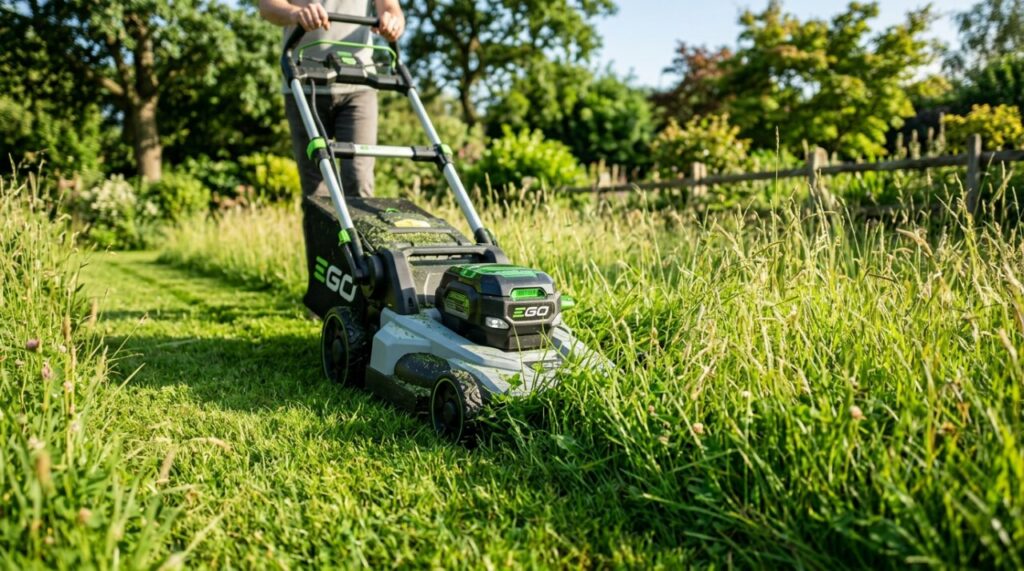
Yes, most electric lawn mowers can cut long grass if the motor is powerful enough and you mow in several gradual passes. Raise the cutting deck, remove only the top third at first, move slowly, and prevent wet clippings from clogging the blade chamber.
Expert Summary>
– Electric lawn mowers can cut grass approximately 6–10 inches tall, but results depend on motor power, blade sharpness, grass density, and moisture. – Corded and battery-powered mowers perform best when no more than one-third of the grass height is removed per pass. – Wet, flattened, or extremely overgrown grass should be trimmed and allowed to dry before mowing. – Robot lawn mowers maintain short grass rather than reclaiming an overgrown lawn. – Multiple high-deck passes are safer and more effective than attempting one low cut.
Step 1: Assess Whether Your Electric Mower Can Handle Long Grass
Check the grass height, density, and condition before switching on the mower. An electric mower can manage moderate overgrowth, but very tall, wet, or tangled vegetation may require preliminary trimming.
The answer to can lawn mowers cut long grass is not determined by height alone. Thick weeds, damp clippings, bent stems, and uneven ground can make a lawn much harder to cut.
Measure the Grass Height
Measure several areas rather than checking one spot. Overgrown lawns often contain hidden patches that are much taller or denser than the visible surface.
Use this general guide:
| Grass condition | Recommended approach | Electric mower suitability |
|---|---|---|
| Up to 4 inches | Mow at the highest practical setting | Excellent |
| 4–6 inches | Use one or two gradual passes | Good |
| 6–10 inches | Trim dense patches, then make multiple passes | Moderate |
| 10–15 inches | Cut down with a string trimmer first | Limited |
| Above 15 inches | Use a brush cutter or professional service | Poor |
| Wet and flattened | Wait for dry conditions and lift the grass first | Poor until dry |
These ranges are practical guidelines, not universal equipment limits. Always follow the maximum operating conditions stated in your mower’s manual.
Identify Thick Weeds and Hidden Debris
Walk through the entire lawn and inspect it before mowing. Long grass can conceal stones, wire, toys, branches, sprinkler heads, pet waste, and uneven ground.
Remove anything that could damage the blade or become a projectile. Mark immovable obstacles so you can keep the mower safely away from them.
Check Whether the Grass Is Wet
Delay mowing if the grass is wet enough to clump together. Wet long grass sticks to the deck, reduces airflow, strains the motor, and creates an uneven finish.
Moisture also increases slipping risks. With a corded mower, wet conditions create an additional electrical safety concern, so follow the manufacturer’s instructions strictly.
Tools and Materials Needed
You need only basic lawn equipment, but each item helps reduce motor strain and improve cutting quality.
| Tool or material | Why you need it | Essential? |
|---|---|---|
| Electric lawn mower | Performs the main cut | Yes |
| Fully charged batteries | Prevents interruptions and deep discharge | For battery mowers |
| Outdoor-rated extension cord | Supplies safe, adequate power | For corded mowers |
| String trimmer | Reduces grass that is too tall for the mower | Recommended |
| Rake | Lifts flattened grass and removes heavy clippings | Recommended |
| Work gloves | Protects hands during inspection and cleaning | Yes |
| Eye protection | Guards against dust and small debris | Yes |
| Closed-toe footwear | Protects feet and improves grip | Yes |
| Blade wrench or mower tool | Supports blade inspection and replacement | Optional |
| Grass-height ruler | Helps plan gradual cutting passes | Optional |
Never inspect the blade, clear the deck, or reach near the discharge opening while the mower has power. Disconnect the cord or remove the battery and safety key first.
Step 2: Prepare the Electric Lawn Mower
Inspect the blade, battery, deck, and power supply before cutting long grass. Overgrown lawns place more resistance on the mower, so small maintenance problems become more noticeable.
A well-prepared mower cuts cleaner and is less likely to stall. Preparation also reduces the temptation to force the machine through vegetation it cannot process.
Sharpen or Replace a Dull Blade
Use a sharp, balanced blade for long grass. A dull blade tears stems instead of slicing them, increasing motor load and leaving brown, ragged grass tips.
Signs of a dull blade include:
- Frayed or shredded grass ends
- Uncut strips after overlapping passes
- Excessive vibration
- Grass being pushed down rather than cut
- A noticeably slower cutting speed
Remove the battery or unplug the mower before checking the blade. If you sharpen it yourself, maintain the original cutting angle and confirm that the blade remains balanced.
Charge Every Battery Fully
Begin with a full battery and keep a charged spare available when possible. Cutting tall grass can reduce runtime substantially because the mower must maintain blade speed under heavier resistance.
Avoid starting a demanding job with a partially charged battery. If your mower has a dual-battery system, use batteries of the capacity and type recommended by the manufacturer.
Inspect the Cord and Power Rating
Use only an outdoor-rated extension cord suitable for the mower’s amperage and total cord length. An undersized cord can cause voltage drop, poor performance, overheating, or equipment damage.
Inspect the full cord for cuts, crushed insulation, exposed conductors, or damaged plugs. Position the cord behind your cutting path so you always mow away from the power source.
Clean the Underside of the Deck
Remove dried clippings before beginning. Built-up grass reduces the space available for new clippings and interferes with the airflow needed for effective cutting and collection.
Disconnect all power before tilting or cleaning the mower. Follow the manual’s instructions for the correct direction in which to tilt the machine.
Step 3: Trim Grass That Is Too Tall for the Mower
Reduce grass taller than approximately 8–10 inches with a string trimmer before mowing. Preliminary trimming prevents tall stems from wrapping around the blade and reduces the amount of material entering the deck.
This step is especially important when the lawn contains tough weeds, seed heads, vines, or flattened patches.
Cut the Top Section First
Trim only enough height to make the lawn manageable. Do not scalp the vegetation down to the final mowing height with a string trimmer.
A practical initial target is 5–7 inches, depending on your mower’s highest deck position. Leave enough stem upright for the mower blade to lift and cut cleanly.
Work in Small Sections
Divide the lawn into manageable zones. Trimming and mowing one zone at a time prevents large piles of cut vegetation from covering the remaining grass.
Rake up dense piles before mowing. Thin, dry trimmings may be processed by some mowers, but heavy piles can obstruct the blade and overload the motor.
Lift Flattened Grass
Use a rake to lift grass that has fallen over. A mower may roll across flattened blades without cutting them, even when the motor is powerful.
Raking also reveals hidden debris and improves airflow around the stems. Let damp, matted areas dry before continuing.
Step 4: Set the Cutting Deck to Its Highest Position
Start at the mower’s highest cutting setting. This is the most important adjustment when using an electric mower on long grass because it limits resistance against the blade.
Attempting to reach the final lawn height in one pass can stall the mower, overheat the motor, and leave clumps across the lawn.
Follow the One-Third Rule
Remove no more than approximately one-third of the grass blade in a single pass. This protects the grass from severe stress and reduces the workload on the mower.
For example, if the grass is 6 inches tall, begin by cutting it to approximately 4 inches. Wait for the grass to recover before reducing it closer to your normal maintenance height.
The one-third rule is a horticultural guideline rather than a rigid measurement. If the grass is exceptionally thick, remove even less per pass.
Adjust All Wheels Evenly
Confirm that the deck is level after changing the cutting height. Some electric mowers use one central lever, while others require individual wheel adjustments.
An uneven deck may scalp one side of the lawn and leave the other side too tall. Consult the manual if the height markings are unclear.
Step 5: Mow Slowly in Narrow, Overlapping Passes
Move slower than you would on a regularly maintained lawn. A deliberate pace gives the blade time to cut and discharge dense material without losing speed.
Listen to the motor throughout the job. A major drop in pitch or repeated surging indicates excessive load.
Cut Half-Width Strips
Use only half to two-thirds of the mower’s deck width in dense grass. Narrow passes reduce the amount of vegetation entering the cutting chamber at one time.
Overlap each new pass with the previous one. Although this requires more walking, it usually produces a cleaner result with fewer stalls.
Approach Tall Patches Gradually
Ease into unusually dense areas rather than pushing straight through them. If the mower slows sharply, stop forward movement and allow the blade to regain speed.
Do not repeatedly force a stalled mower into the same patch. Trim that section manually or reduce the effective cutting width.
Mow Across Slopes, Not Up and Down
Use the manufacturer’s recommended slope technique and avoid steep ground. For most walk-behind mowers, working across a mild slope provides better footing and control than moving vertically.
Never pull the mower toward your feet through long grass. Turn carefully and maintain a stable walking pace.
Manage the Cord Deliberately
Begin near the power source and mow away from it. Keep the extension cord over your shoulder or behind the completed cutting area, provided this does not conflict with the manufacturer’s safety guidance.
Plan parallel passes that prevent the cord from crossing in front of the mower. Stop immediately if you lose track of its position.
Step 6: Clear Clogs Without Damaging the Mower
Stop and clear heavy buildup whenever clippings stop discharging normally. Continuing to operate a clogged mower can overheat the motor and damage belts, blade adapters, or internal electronics.
Frequent clogging usually means the grass is too wet, the deck is too low, or the cutting path is too wide.
Shut Down Completely
Release the operating handle and wait until the blade stops. Unplug a corded mower or remove the battery and safety key from a cordless model.
Never assume the blade is safe because it appears stationary. Stored tension or movement during cleaning can cause serious injury.
Remove Clippings With a Tool
Use a wooden or plastic tool rather than your hands. Clear the discharge opening and blade chamber while wearing sturdy gloves.
Do not spray water into the motor, battery compartment, controls, or electrical connectors. Use a dry brush or scraper unless the manual specifically approves another cleaning method.
Choose Side Discharge When Available
Use side discharge for heavy, dry grass if your mower supports it. Bagging and fine mulching require repeated processing, which can overload a smaller electric mower in overgrown conditions.
The main trade-offs are clear:
| Cutting mode | Performance in long grass | Main advantage | Main drawback |
|---|---|---|---|
| Side discharge | Best | Moves clippings out quickly | Requires cleanup |
| Bagging | Moderate | Leaves a tidy surface | Bag fills rapidly |
| Mulching | Lowest | Returns nutrients to soil | Clogs more easily |
| Rear discharge | Good | Spreads clippings behind mower | Can leave visible rows |
If only bagging is available, empty the bag before it becomes packed. A full bag reduces airflow and cutting performance.
Step 7: Make a Second Pass at a Lower Height
Lower the deck by one setting only after completing the first pass. A second gradual cut improves the finish without placing the full burden on the motor at once.
For severely overgrown grass, wait one to three days between major height reductions. This recovery period helps prevent yellowing, thinning, and heat stress.
Change the Mowing Direction
Mow the second pass at a different angle. Crossing the first direction lifts bent stems and catches strips that were missed.
A practical pattern is:
- Make the first pass from north to south.
- Rake or disperse heavy clippings.
- Lower the deck by one level.
- Make the second pass from east to west.
- Inspect the lawn before considering another reduction.
Stop at a Healthy Final Height
Do not confuse a very short lawn with a well-cut lawn. Many common turf grasses perform better when maintained around 2.5–4 inches, although the ideal height varies by grass species, climate, and season.
Keeping the lawn slightly taller can improve root development and shade out some weeds. Check local horticultural guidance if you do not know your grass type.
Step 8: Clean and Inspect the Mower After Cutting
Clean the mower immediately after processing long grass. Thick clippings retain moisture and can corrode metal parts, obstruct airflow, and create odor.
Post-mowing care is particularly important for compact electric models with shallow decks.
Remove the Power Source
Disconnect the cord or remove the batteries and safety key. Wait until the motor has cooled before cleaning around ventilation openings.
Do not leave a battery in direct sun or inside a hot vehicle. Store and charge it within the temperature range specified by the manufacturer.
Brush Away Clippings
Clean the underside, wheels, discharge chute, and air vents. Use a scraper or stiff brush while avoiding electrical components.
Inspect the blade for nicks or bending caused by hidden debris. Replace a damaged blade rather than attempting to straighten it.
Check for Overheating
Allow the mower to cool if the housing, battery, or motor area feels unusually hot. Persistent overheating may indicate a clogged deck, dull blade, failing battery, or unsuitable mowing conditions.
If the mower repeatedly shuts down despite a clean deck and sharp blade, stop using it and consult the troubleshooting guidance or an authorized repair provider.
Can Electric Lawn Mowers Cut Long Grass Better Than Gas Mowers?
Electric mowers can handle moderate overgrowth, but gas mowers generally provide more sustained power for extremely dense or neglected lawns. Electric models are quieter, easier to start, and require less routine maintenance, while gas machines often recover from heavy loads more effectively.
| Factor | Electric mower | Gas mower |
|---|---|---|
| Moderately long grass | Good with gradual passes | Very good |
| Extremely dense grass | May stall or reduce runtime | Usually stronger |
| Setup | Fast and simple | Requires fuel and engine checks |
| Maintenance | Relatively low | Higher |
| Noise | Lower | Higher |
| Local emissions during use | None | Produces exhaust |
| Runtime | Limited by battery or cord access | Limited by fuel |
| Best user | Regular homeowner maintenance | Large or heavily overgrown properties |
A capable cordless mower with a sharp blade can outperform a poorly maintained gas mower. However, equipment condition, deck design, torque management, and grass density matter more than the power-source label alone.
Can Robot Lawn Mowers Cut Long Grass?
Most robot lawn mowers are not designed to reclaim long or overgrown grass. They work best when cutting tiny amounts frequently, so the lawn should usually be reduced to a manageable height with a conventional mower first.
For readers asking can robot lawn mowers cut long grass, the practical answer is: only within the cutting-height and terrain limits stated by the manufacturer.
Robot mowers may struggle with:
- Grass above their maximum deck height
- Thick weeds and seed stalks
- Wet or flattened vegetation
- Hidden branches and debris
- Deep ruts or uneven ground
- Dense piles of old clippings
After the initial cleanup, a robot mower can prevent the lawn from becoming overgrown again. Its value is maintenance automation, not heavy vegetation removal.
How Powerful Should an Electric Mower Be for Tall Grass?
Choose a mower with strong torque management, an appropriate deck size, and enough battery capacity for the lawn. Voltage alone does not reveal total cutting performance, so compare the complete system rather than relying on one specification.
Useful features include:
- Brushless motor for efficient power delivery and reduced maintenance
- Automatic load sensing that increases blade power in dense areas
- Multiple battery slots for longer runtime
- High maximum deck setting
- Side-discharge option
- Easy single-lever height adjustment
- Replacement blades and batteries that are readily available
- Overload and thermal protection
For a small lawn, a corded model can provide consistent power without battery limits. Its main disadvantages are cord management and dependence on a nearby outdoor outlet.
Pro Tips for Cutting Long Grass With an Electric Mower
The safest and fastest method is to reduce cutting resistance before asking the mower to do more work. Good preparation often matters more than purchasing a more powerful machine.
Mow During Dry, Cool Conditions
Cut after morning moisture has evaporated but before the hottest part of the day. Dry stems stand upright and move through the deck more easily.
Keep a Spare Battery Cool
Do not leave the spare battery charging in direct sunlight beside the lawn. Heat can reduce performance and may trigger battery protection.
Divide Large Lawns Into Zones
Complete one section at a high setting before moving to the next. This approach makes it easier to monitor battery use and prevents fatigue from rushing.
Rake Between Passes
Remove thick windrows before lowering the deck. A second pass should cut standing grass, not repeatedly process a carpet of old clippings.
Maintain the Lawn More Frequently
Once the overgrowth is controlled, mow often enough to follow the one-third rule. Frequent light cuts are easier on both the grass and the mower.
Common Mistakes to Avoid
Most poor results come from cutting too low, moving too fast, or mowing wet grass. These mistakes increase motor strain and can damage the lawn.
Cutting to the Final Height in One Pass
Removing half or more of the blade length shocks the grass and overloads the mower. Use progressive deck settings instead.
Forcing the Mower When It Slows
Repeatedly pushing through