
What Causes Vapor Lock in Lawn Mowers: A Complete Diagnostic Guide
Vapor lock in lawn mowers occurs when fuel vaporizes inside the fuel line or carburetor before reaching the engine, creating a gas bubble that blocks liquid fuel flow. Understanding the root causes helps you diagnose, fix, and prevent the problem — saving time, money, and frustration when your mower dies mid-job.
Expert Summary
- Vapor lock happens when heat converts liquid fuel into vapor inside the fuel delivery system, starving the engine of combustible mixture.
- The most common cause is excessive engine heat combined with ethanol-blended fuel (E10 or E15), which vaporizes at lower temperatures than pure gasoline.
- A hot restart failure — the mower starts cold but refuses to restart after short break — is the single clearest diagnostic sign of vapor lock.
- Fuel line routing too close to the engine block or exhaust manifold is a leading mechanical contributor in push and riding mowers alike.
- Vapor lock is preventable with proper fuel selection, correct fuel line routing, and routine cooling system maintenance.
Step1: Understand Exactly What Vapor Lock Is
Vapor lock is a fuel starvation condition, not an ignition or mechanical failure. Knowing this distinction saves hours of misdiagnosis.
Gasoline is a liquid at room temperature, but it has a relatively low boiling point. When the fuel inside your mower’s fuel line, fuel pump, or carburetor bowl gets hot enough, it transitions from liquid to vapor.
Unlike liquid fuel, vapor cannot be metered or atomized properly by the carburetor. The engine effectively runs out of fuel — even though the tank is full.
How the Fuel Delivery System Works
- Fuel travels from the tank through the fuel line to the fuel pump (on some models) or directly to the carburetor.
- The carburetor mixes vaporized fuel with air in precise ratios before it enters the combustion chamber.
- If vapor bubles form earlier in the system — in the line or pump — fuel delivery stops.
This is why vapor lock feels exactly like running out of gas: the engine sputters, loses power, then stalls completely.
Step 2: Identify the Primary Causes of Vapor Lock
Five core factors drive vapor lock in lawn mowers. Most cases involve more than one factor working together.
Cause 1: Ethanol-Blended Fuel (E10/E15)
Modern pump gasoline in the U.S. contains 10–15% ethanol. Ethanol has a lower boiling point than pure gasoline and absorbs moisture from the air.
This combination raises the vapor pressure of the fuel mixture, making it far more prone to vaporizing inside hot fuel lines. Small engines were not originally enginered for high-ethanol blends.
Ethanol also degrades rubber fuel lines and carburetor gaskets over time, creating cracks that expose fuel to more heat from surrounding engine components.
Cause 2: Excessive Engine Heat
A lawn mower engine runs at high load — especially when cutting thick or wet grass. This generates substantial radiant and conductive heat.
When you pause mid-mow and shut the engine off, the cooling airflow stops but the heat doesn’t. Residual heat from the engine block, cylinder head, and exhaust soaks into the fuel system.
This “heat soak” period — typically 5to 20 minutes after shutdown — is when vapor lock is most likely to occur. The fuel sitting stationary in the lines has no movement to carry away heat.
Cause 3: Poor Fuel Line Routing
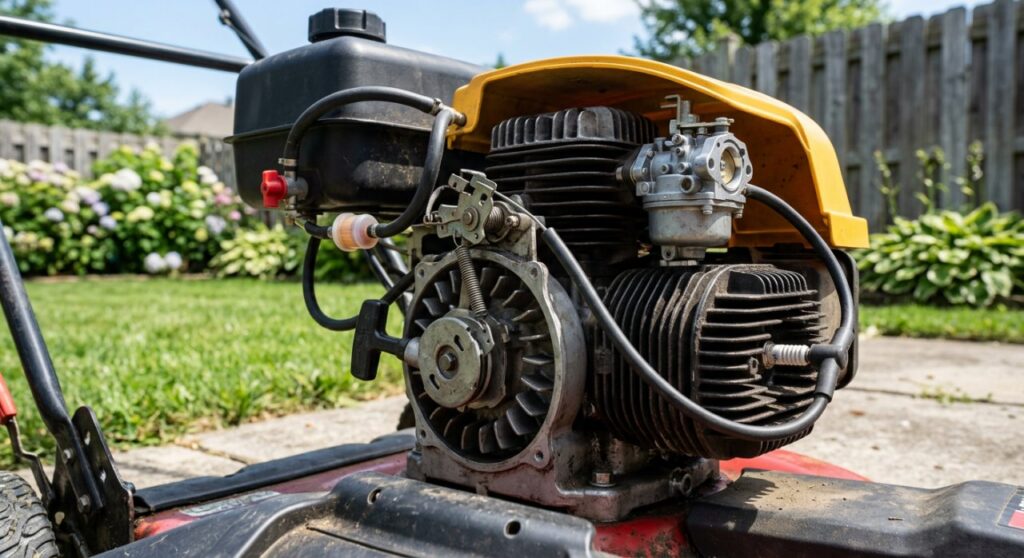
Fuel lines routed too close to the exhaust manifold, muffler, or engine block absorb radiant heat continuously during operation.
On many budget push mowers, fuel line routing is a compromise rather than an enginered solution. Lines may pass within centimeters of hot metal surfaces.
Even a 1–2 inch proximity to an exhaust component can raise fuel temperature by 20–40°F, which can be enough to push borderline fuel over its vaporization threshold.
Cause 4: Weak or Failing Fuel CapVent
Every lawn mower fuel cap has a small vent hole that allows air into the tank as fuel is consumed. If this vent clogs or fails, it creates a vacuum inside the tank that restricts fuel flow.
A restricted tank creates a pressure differential that lowers the boiling point of fuel inside the lines — a direct contributor to vapor lock conditions.
This is one of the most commonly overlooked causes. It is also the easiest to test: losen the fuel cap slightly while the mower is struggling to run, and see if performance improves immediately.
Cause 5: Clogged or Partially Blocked Fuel Filter
A partially clogged fuel filter slows fuel flow, meaning fuel spends more time sitting in a hot environment before reaching the carburetor.
Slow-moving or stationary fuel in a hot line vaporizes faster than fuel flowing quickly through the system. A clean filter maintains adequate flow velocity to help carry heat away.
Most small engine manufacturers recommend replacing the inline fuel filter every season or every 25hours of operation, whichever comes first.
Step 3: Recognize the Symptoms of Vapor Lock
The clearest sign of vapor lock is an engine that starts fine when cold but refuses to restart after a 10–20 minute cool-down break.
This pattern distinguishes vapor lock from most other failure modes like a fouled spark plug or dead battery (on electric start models).
| Symptom | Likely Cause | Similar To |
|---|---|---|
| Cold start works, hot restart fails | Vapor lock (heat soak) | Bad starter solenoid |
| Engine sputters and dies mid-mow | Active vapor lock | Fuel starvation from clog |
| Cranks but won’t fire when hot | Carburetor bowl vaporized | Floded engine |
| Hard start, rough idle in summer heat | Borderline vapor lock | Dirty air filter |
| Normal after 30-minute wait | Classic vapor lock signature | Vapor lock |
The 30-minute wait test is definitive: if your mower restarts normally after sitting with the hood/shroud open for 30 minutes, vapor lock is almost certainly the cause.
Step 4: Diagnose Vapor Lock vs. Other Fuel Problems
Before treating vapor lock, rule out mechanical causes that mic the same symptoms.
Tools Needed for Diagnosis
| Tool | Purpose |
|---|---|
| Cleanrag or shop towel | Check for fuel flow at carburetor inlet |
| Small container | Catch fuel during flow test |
| Screwdriver (flathead) | Remove fuel bowl for inspection |
| Multimeter (optional) | Test electric fuel pump voltage |
| Fuel pressure gauge (optional) | Measure delivery pressure |
Diagnostic Steps
- Check for spark first. Remove the spark plug and ground it against the engine block while cranking. A strong blue spark rules out ignition as the cause.
- Test fuel flow. Disconnect the fuel line at the carburetor inlet and crank the engine briefly. Fuel should flow freely. Weak or no flow points to a line blockage, failed fuel pump, or vapor lock.
- Perform the cap vent test. Loosen the fuel cap one half-turn while the engine is struggling. If performance immediately improves, the cap vent is clogged — not vapor lock.
- Try the cool-down wait. Let the mower sit with the engine cover open for 20–30 minutes. If it restarts easily, you have confirmed vapor lock via heat soak.
- Inspect fuel line routing. With the engine cool, trace the fuel line from tank to carburetor. Note any sections running within 2 inches of the exhaust or engine block.
Step 5: Fix an Active Vapor Lock Episode
When vapor lock has already stopped your mower, the immediate goal is to cool the fuel system and restore liquid fuel to the carburetor.
Quick Field Fix (No Tools Required)
- Shut off the engine immediately if it hasn’t stalled on its own. Running an engine starved of fuel causes lean combustion that can damage valves.
- Open or remove the engine shroud/hood to expose the engine to ambient air. This speeds heat dissipation significantly.
- Loosen the fuel cap slightly (do not remove it fully) to equalize any pressure differential in the tank.
- Wait 20–30 minutes. Do not attempt to restart during this window — each failed crank attempt can flood the carburetor with residual vapor.
- Restart normally. Most vapor lock episodes resolve completely once the fuel system cools below vaporization temperature.
If the Mower Still Won’t Start After Cooling
- Remove the carburetor float bowl (typically one bolt on the bottom of the carburetor).
- Check for fuel in the bowl. An empty bowl confirms the fuel delivery was blocked — either by vapor lock or a physical blockage upstream.
- If vapor is suspected, manually introduce a small amount of fresh fuel directly into the carburetor throat and attempt start.
- If the engine fires briefly then dies again, the fuel line is still blocked or fuel delivery is insufficient — trace back to the filter and fuel pump.
Step 6: Prevent Vapor Lock Long-Term
Prevention is significantly cheaper and less time-consuming than repeated diagnosis and repair. These are the highest-impact changes you can make.
Use Ethanol-Free Fuel
Ethanol-free gasoline (E0) is the single most effective prevention measure for vapor lock in small engines.
It has a higher boiling point, does not absorb moisture, and does not degrade rubber fuel system components. It is available at many marinas, farm supply stores, and select gas stations.
Ethanol-free fuel is more expensive — typically $0.50–$1.50 more per gallon — but a lawn mower’s small tank capacity makes this a minimal cost for significant reliability gain.
Add a Fuel Stabilizer
For mowers used seasonally or stored between uses, fuel stabilizers like Sta-Bil or Sea Foam slow fuel degradation and reduce vapor pressure buildup in the tank and lines.
Add stabilizer at every fill-up if you are prone to vapor lock issues, not just at end-of-season storage.
Re-Route or Insulate the Fuel Line
If your fuel line runs close to a heat source, two options exist:
- Re-route the line away from the exhaust manifold and engine block where possible. Even adding2–3 inches of clearance makes a measurable difference.
- Wrap the line in thermal insulation sleeve (available at auto parts stores). This is a cost-effective option when re-routing is not practical.
Replace the Fuel Filter Annually
A fresh fuel filter costs $3–$8 at most hardware stores and takes 10minutes to replace. It is one of the highest-ROI maintenance items on any small engine.
Set a reminder to replace it at the start of every mowing season.
Inspect and Clean the Fuel Cap Vent
Use a thin wire or compressed air to clear the vent hole in the fuel cap. Do this at the start of each season and mid-season if you operate in dusty conditions.
A vented fuel cap costs $5–$15 if the original is damaged beyond cleaning.
Keep the Cooling Fins Clean
Clogged air cooling fins on the engine cylinder are a major contributor to excessive heat buildup. Clean grass clippings, dirt, and debris from the fins before every mowing session.
Use a stiff brush or compressed air. This single habit noticeably reduces operating temperature and extends engine life beyond just preventing vapor lock.
Pro Tips From Small Engine Technicians
- Park in shade after mowing. Leaving a hot mower in direct sunlight extends the heat soak period and increases vapor lock risk if you need to restart.
- Avoidpping off the fuel tank. Overfilling leaves no room for fuel expansion as it heats, which raises pressure inside the fuel system.
- Run ethanol-free fuel at the end of the season. This prevents ethanol residue from gumming the carburetor during storage — a common cause of hard starts the following spring.
- Check for a return fuel line. Some riding mowers have a fuel return line. If it is kinked or clogged, fuel pressure builds up and heat transfer into the fuel increases.
- Document your mowing pattern. If vapor lock only occurs on days above 90°F or when cutting for more than 45 consecutive minutes, that data points directly to heat-triggered vapor lock rather than a mechanical fault.
Common Mistakes to Avoid
| Mistake | Why It’s Costly |
|---|---|
| Replacing the carburetor first | Vapor lock is not a carburetor defect — you’ll waste $40–$120 |
| Using premium pump gas with ethanol | Higher octane doesn’t prevent vapor lock; lower ethanol content does |
| Cranking repeatedly during an episode | Floods the carburetor with vapor, making restart harder |
| Ignoring fuel line condition | Cracked, heat-damaged lines are vapor lock accelerator |
| Skipping the fuel cap vent test | The simplest fix is routinely overlooked |
| Using old stored fuel | Fuel older than 30 days degrades and vaporizes more readily |
Frequently Asked Questions
What does vapor lock feel like in a lawn mower?
Vapor lock typically feels like running out of gas: the engine loses power, sputters, and stalls. The defining characteristic is that the mower will not restart when hot but starts normally once the engine has cooled for 20–30 minutes. This hot-restart failure pattern is the most reliable diagnostic indicator.
Can vapor lock damage a lawn mower engine?
Vapor lock itself does not directly damage engine components, but the lean combustion condition it creates — running with insufficient fuel — can overheat valves and cause premature wear over repeated episodes. Preventing vapor lock is important for long-term engine health, not just convenience.
Does vapor lock only happen in hot weather?
Hot ambient temperatures make vapor lock more likely, but it can occur in moderate weather if engine heat is excessive due to clogged cooling fins, heavy load, or fuel line routing issues. The ambient temperature is a contributing factor, not a requirement.
Is vapor lock more common in older lawn mowers?
Yes. Older mowers were designed before high-ethanol fuel blends became standard. Their fuel line materials, routing design, and carburetor specifications were optimized for pure gasoline. Running modern E10 fuel in an older mower significantly increases vapor lock risk.
How is vapor lock different from a floded engine?
A flooded engine has too much liquid fuel in the combustion chamber — the opposite problem. Vapor lock has too little fuel delivery due to vaporization in the supply line. A flooded engine often smells strongly of raw gasoline; vapor lock typically does not. Choke position during restart also differs: vapor lock restarts benefit from full choke; a flooded engine typically needs the choke open.
Conclusion
Vapor lock in lawn mowers is caused by a combination of heat, fuel chemistry, and equipment design factors — most commonly ethanol-blended fuel vaporizing inside a hot fuel line or carburetor. The good news is that all of the root causes are addressable with straightforward, low-cost maintenance habits.
The most impactful actions you can take right now:
- Switch to ethanol-free fuel for your mowing equipment.
- Replace the fuel filter at the start of every season.
- Clean the cooling fins before each use.
- Test the fuel cap vent if symptoms appear suddenly.
For freelancers and solopreneurs who depend on a functional lawn care setup to earn income, an unplanned equipment failure mid-job has a direct cost. A $5fuel filter and ethanol-free gas is far cheaper than a service call or a missed client.
Apply these fixes once, build them into your seasonal routine, and vapor lock becomes a problem you diagnose in other people’s mowers — not your own.