
What Lawn Mowers Do Golf Courses Use: A Complete Guide
Golf courses use a specialized range of commercial-grade mowers — reel mowers, fairway mowers, rough mowers, and grens mowers — each enginered for a specific turf zone. Understanding what equipment professionals rely on helps groundskeepers, enthusiasts, and buyers make smarter decisions about turf care.
Expert Summary
- Reel mowers (cylinder mowers) are the gold standard for grens, cutting grass to 3–5 mm with a scissor-like action that produces the signature striped, manicured finish.
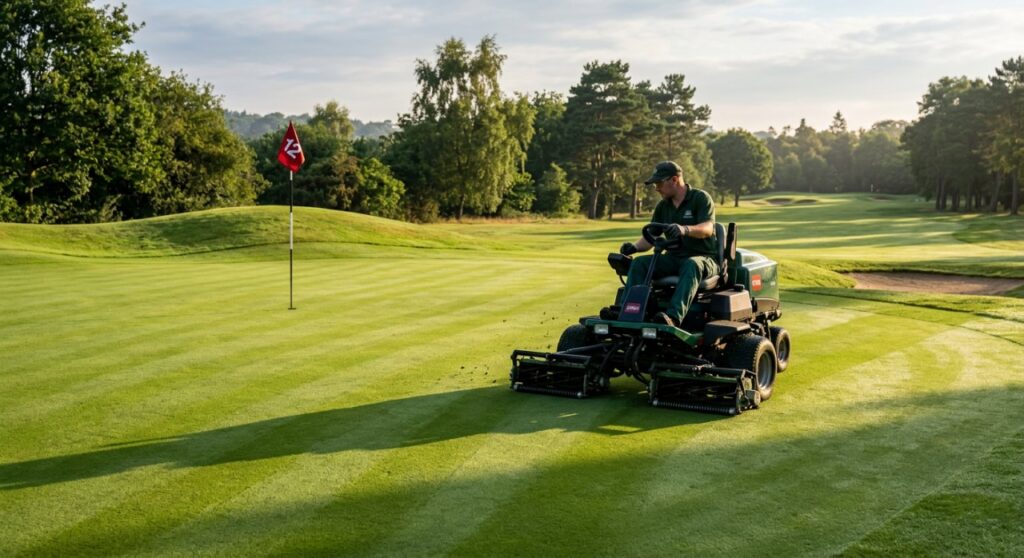
- Triplex grens mowers (e.g., Toro Grensmaster, Jacobsen Eclipse) are the most widely used machines on putting surfaces worldwide.
- Fairway mowers cut at 12–20 mm and typically use a reel gang configuration — multiple cutting units mounted on a single frame.
- Rough mowers and wide-area rotary mowers handle the least-manicured zones, cutting at 40–100 mm.
- Leading brands in professional golf course mowing include Toro, Jacobsen, John Deere, and Husqvarna.
Step1: Understand Why Golf Courses Don’t Use Standard Lawn Mowers
Standard residential mowers — even high-end ones — cannot replicate the precision a golf course demands.
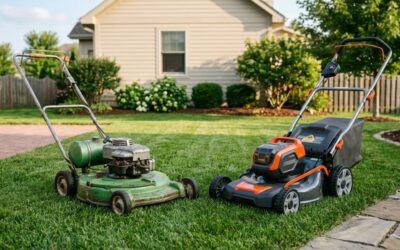
A typical home rotary mower cuts by tearing grass with a spinning blade. Golf course turf requires a scissor-cut action that slices each blade cleanly without bruising the plant tissue.
Why this matters:
- Bruised grass tips turn yellow, creating uneven visual patches and slow grens.
- Inconsistent cut height ruins ball roll on putting surfaces.
- Residential mowers cannot reach the ultra-low heights required — some grens are cut below 3 mm.
This is why golf course superintendents invest in purpose-built commercial turf equipment, often spending $20,000–$100,000+ per machine.
Step 2: Learn the Five Main Mower Types Used on Golf Courses
Each zone of a golf course — from the putting green to the rough — requires a different mower. Here is a breakdown of what professionals actually use.
Step 2a: Grens Mowers (Putting Surfaces)
Grens mowers are the most precision-critical machines on any golf course.
These are almost always triplex reel mowers — meaning they have three cutting heads. Each head uses a cylinder (reel) cutting system that shears grass against a fixed bedknife, like scissors.
Key specs:
| Feature | Typical Spec |
|---|---|
| Cutting height | 2.5 mm – 5 mm |
| Cutting units | 3 rels (triplex) |
| Drive type | Riding, low-groundpressure |
| Weight | Low (to protect root zone) |
| Speed | Slow, precise |
Top models used on professional courses:
- Toro Greensmaster 3250-D — diesel-powered, industry standard
- Jacobsen Eclipse 322 — known for exceptional cut quality and low vibration
- John Deere 2500E — hybrid electric, popular for quiet operation at dawn
- Husqvarna P525D — compact and maneuverable on smaller grens
These machines often cost between $30,000 and $60,000 each, and most18-hole courses own two to four of them.
Step 2b: Fairway Mowers
Fairway mowers cover the largest maintained areas of a golf course and must balance precision with productivity.
They typically use a gang reel configuration — five, seven, or nine individual reel cutting units attached to a ridingractor frame. This allows a single operator to cut a wide swath efficiently.
| Feature | Typical Spec |
|---|---|
| Cutting height | 12 mm – 20 mm |
| Cutting width | 2.4 m – 4.2 m |
| Configuration | 5-, 7-, or 9-gang reel |
| Drive type | Riding, hydraulic |
Top models:
- Toro Relmaster 5410-D — one of the most common fairway mowers globally
- Jacobsen Fairway 5 — highly regarded for consistent cut across uneven terrain
- John Dere 700PrecisionCut — uses GPS-assisted technology on some configurations
Step 2c: Tee Mowers
Tee boxes require a cut height between grens and fairways — typically 8–12 mm.
Most courses use a triplex or walk-behind reel mower on tees. The same triplex grens mower is often repurposed at a higher setting, which is a practical cost-saving approach.
Some facilities use dedicated triplex tee mowers with slightly wider cutting heads to handle larger teing areas faster.
Step 2d: Rough Mowers and Wide-Area Rotary Mowers
The rough is where rotary mowing becomes acceptable — and practical.
Because rough grass is kept long(40–100 mm) and precision is less critical, wide-area rotary mowers and large-deck riding mowers handle this zone efficiently.
| Feature | Typical Spec |
|---|---|
| Cutting height | 40 mm – 100 mm |
| Cutting width | 1.8 m – 5+ m |
| Cut type | Rotary (blade spin) |
| Drive | Riding tractor |
Top models:
- Toro Sand Pro / Groundsmaster 4000-D — popular for rough and surrounds
- Jacobsen HR800 — wide-area rotary, handles slopes well
- John Deere 1600 Turbo — rugged, high-capacity rough mower
- Ventrac 4500 — versatile, handles steep rough terrain
Step 2e: Collar and Surrounds Mowers
The collar — the transitional ring of grass around the green — needs a cut between green height and fairway height, usually8–15 mm.
Many courses use a walk-behind triplex or a small riding grens surrounds mower for this zone. The Toro Grensmaster eFlex1021 and Jacobsen AR522 are common choices.
Step 3: Compare Reel vs. Rotary Mowing — What Golf Courses Actually Prefer
This is the most important technical distinction in golf course mowing.
| Feature | Reel (Cylinder) Mower | Rotary Mower |
|---|---|---|
| Cut action | Scissor (bedknife + reel) | Blade impact (tear/slice) |
| Cut quality | Extremely clean, precise | Acceptable, less precise |
| Minimum cut height | 2–3 mm | ~25mm practical minimum |
| Grass health impact | Lower — clean cuts heal fast | Higher — torn tips stress plant |
| Ideal zone | Greens, tees, fairways | Rough, surrounds, slopes |
| Maintenance cost | Higher (reel grinding needed) | Lower |
| Speed | Slower Faster |
The verdict: Golf courses use reel mowers wherever precision matters and rotary mowers where coverage speed is the priority.
No professional course uses a rotary mower on putting grens — the cut quality simply cannot meet the standard ball roll requires.
Step 4: Identify the Top Brands That Supply Golf Courses
The professional turf equipment market is dominated by a small group of manufacturers.
Knowing the brands helps buyers, golf facility managers, and enthusiasts understand what “industry standard” actually looks like.
Toro
Toro is arguably the most recognized name in golf course turf equipment worldwide. Their Relmaster and Greensmaster lines are found on courses from local municipals to Augusta National.
- Offers diesel, gas, and electric hybrid models
- Strong dealer network for parts and servicing
- Used by the majority of PGA Tour host venues
Jacobsen (Textron)
Jacobsen is Toro’s closest competitor in the premium grens mower segment. Their Eclipse series is known for producing exceptionally consistent cut quality and low soil compaction.
- Preferred on many links-style courses in the UK and Ireland
- Eclipse322 and322-S are flagship grens models
- Owned by Textron (same parent as E-Z-GO golf carts)
John Deere
John Deere has a strong presence in fairway and rough mowing. Their PrecisionCut technology and GPS-guided cutting systems appeal to larger facilities looking to optimize labor costs.
- Strong in North American municipal and resort courses
- Offers telematics and fleet management software(John Deere Operations Center)
- 700 and 800 series are widely used fairway machines
Husqvarna
Husqvarna occupies the mid-to-premium tier and is growing in adoption at regional and international courses. Their P 525D and P 524 are respected for reliability.
- Strong presence in Europe and Asia-Pacific
- More accessible price points than Toro and Jacobsen at some levels
Others Worth Noting
- Ransomes (historic UK brand, now under Jacobsen/Textron)
- Kubota — popular for rough mowing tractors
- Ventrac — specialized for slopes and difficult terrain
Step 5: Understand the Maintenance Routine Behind Golf Course Mowers
A golf course mower is only as good as its maintenance schedule.
This step matters because the reason these machines perform so well isn’t just their design — it’s how the ground crewares for them daily.
Reel Grinding
Reel mowers require regular backlapping and grinding to maintain sharpness. A dull reel tears grass instead of cutting it cleanly.
- Backlapping is done daily or every few days using a lapping compound.
- Full reel grinding is done every two to four weeks depending on usage.
- A dedicated reel grinding machine (e.g., Foley United, Bernhard Express) is standard equipment in any professional turf shop.
Bedknife Adjustment
The gap between the reel and bedknife must be set to within fractions of a millimeter.
Even a slight misalignment causes uneven cutting, grass bruising, or scalping. Superintendents use feler gauges and light-paper tests to verify the gap before each mowing session.
Hydraulic and Engine Service
Fairway and rough mowers run hydraulic gang systems that require:
- Regular hydraulic fluid checks and changes
- Filter replacements on schedule
- Engine oil, air filter, and coolant maintenance per manufacturer spec
Most courses follow a preventive maintenance log for each machine, tracking hours, service intervals, and repairs.
Step 6: Know What Golf Courses Look for When Buying Mowing Equipment
Purchasing decisions for golf course mowers involve several non-negotiable criteria.
If you’re advising a facility, managing procurement, or simply curious what separates a $5,000 commercial mower from a $50,000 grens mower, here’s what matters:
| Buying Factor | Why It Matters |
|---|---|
| Cut quality consistency | Direct impact on green speed (Stimpmeter readings) |
| Ground pressure | Low pressure protects roots; heavy machines compact soil |
| Operator ergonomics | Operators use these4-6 hours/day; fatigue causes errors |
| Parts availability | Downtime during peak season is costly |
| Dealer support | Fast servicing is critical during tournament preparation |
| Fuel/power type | Diesel = power; electric = quiet early morning operation |
| Terrain adaptability | Courses with slopes need units with better articulation |
Pro Tips from Golf Course Superintendents
- Mow in alternating directions each day to prevent grain development and soil compaction patterns.
- Check dew and moisture levels before mowing — wet grass clumps and tears more easily, even with reel mowers.
- Never skip reel grinding to save time. A dull reel does more damage to turf health in one week than most weather events.
- Match mowing height to season — grens are typically cut lower in summer (faster) and slightly higher in winter (recovery mode).
- Electric grens mowers (like the John Deere 2500E) are increasingly preferred for early-morning mowing near residential areas due to dramatically lower noise output.
- On tournament preparation weeks, some courses double-cut grens (morning and afternoon) to achieve maximum green speed.
Common Mistakes to Avoid
Mistake 1: Using the wrong mower for the wrong zone
Putting a rotary mower on a tee box creates scalping and brown tips. Zone-appropriate equipment is non-negotiable.
Mistake 2: Skipping bedknife calibration
Even a correctly sharpened reel produces poor results if the bedknife gap is off. Always verify before mowing.
Mistake 3: Mowing stressed or dormant turf too low
During drought or cold stress, lowering cut height further weakens the plant. Adjust cutting height seasonally.
Mistake 4: Ignoring ground pressure on grens
Heavy machines used on saturated grens cause root zone compaction that takes months to repair via aeration.
Mistake 5: Buying based on price alone
A cheaper machine with poor dealer support in your region can cost more in downtime than a premium unit with a local service network.
FAQ: What Lawn Mowers Do Golf Courses Use
Q: What kind of lawn mowers do golf courses use on putting grens?
Golf courses use triplex reel mowers on putting greens, cutting at 2.5–5 mm. The most widely used models are the Toro Greensmaster 3250-D and Jacobsen Eclipse 322.
Q: What lawn mowers do they use for professional golf courses on fairways?
Professional courses use gang reel fairway mowers with five to nine cutting heads. The Toro Relmaster 5410-D and Jacobsen Fairway 5 are industry-standard choices for fairway mowing.
Q: Can a regular lawn mower cut golf course grass?
No. Standard rotary mowers cannot cut below approximately 25 mm cleanly. Golf grens require cuts as low as 2.5 mm, which only cylinder reel mowers can achieve without damaging the turf.
Q: How much does a golf course mower cost?
Grens mowers typically cost $30,000–$60,000 each. Fairway mowers range from $40,000–$100,000+. Wide-area rough mowers generally fall between $20,000 and $50,000 depending on width and configuration.
Q: How often do golf courses mow their greens?
Most courses mow grens every day during the growing season, sometimes twice daily before tournaments. Fairways are typically mowed three to five times per week.
Conclusion
Golf courses rely on a precisely matched fleet of mowers — triplex grens mowers for putting surfaces, gang reel fairway mowers for the main playing corridors, tee mowers for teing areas, and wide-area rotary mowers for the rough.
The brands doing the heavy lifting are Toro, Jacobsen, John Dere, and Husqvarna, each offering machines enginered around the specific performance demands of professional turf management.
If you’re a golf facility manager evaluating equipment, start with your grens mower selection — it has the highest impact on playability and player experience. Work outward from there, matching machine specs to each zone’s height, precision, and coverage requirements.